For 8-year-old Kaiya Munoz, the San Manuel Pow Wow meant a chance to dance for someone who needed it. For Enoch, an artist behind Reclaim Designs, it meant sharing artwork that brings pop culture into conversation with traditional teachings. For participants and visitors gathering at CSUSB’s athletic fields Sept. 18-20, it was an opportunity to connect across generations and tribal nations through music, dance, art and food, continuing a celebration of Native cultures and community that began 30 years ago.
Attending the event for the first time with her mother, Sierra, Kaiya said she was dancing for Sherry, her mother’s friend who was sick. Asked what made the gathering special, she had a simple answer, dancing, for her ancestors and people that are sick.
That you’re able to dance for your ancestors and people that are sick
Hosted by the Yuhaaviatam of San Manuel Nation, the three-day gathering created space for those connections throughout the event grounds.
Those connections extended from the dance arena into booths where artists discussed their work, families continued businesses inherited from earlier generations and organizations introduced visitors to services supporting their communities.
In 1996, tribal citizens Cruz Chacon and Tom Ramos established the powwow to bring Native people together and create a place to share and support their cultures. The powwow remains free to the public, with dancers, singers and artisans coming and representing tribal nations from across the United States and Canada.
 Stephen Day
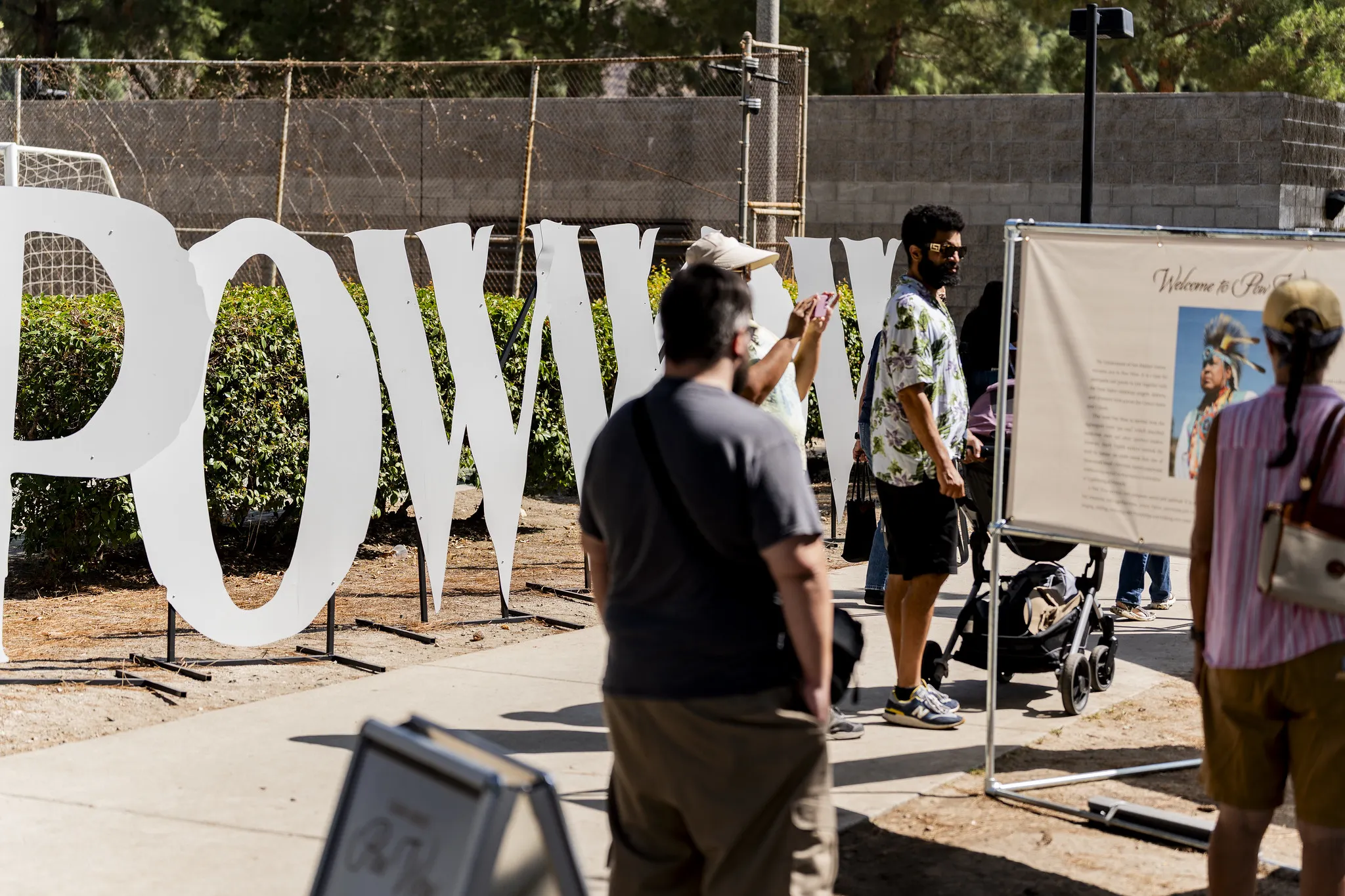
Along the walkway into the event, educational displays introduced visitors to the dances, music and protocols they would encounter. The panels described the powwow’s social and spiritual purposes while emphasizing that the meanings and origins of cultural practices vary among tribal communities.
Visitors could learn about the healing significance associated with the jingle dress dance, the athletic movements of fancy shawl dancers and the stories carried through Southern California bird singing. Other panels explained the Grand Entry, the significance of eagle feathers and the personal meaning of dancers’ regalia.
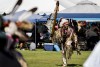
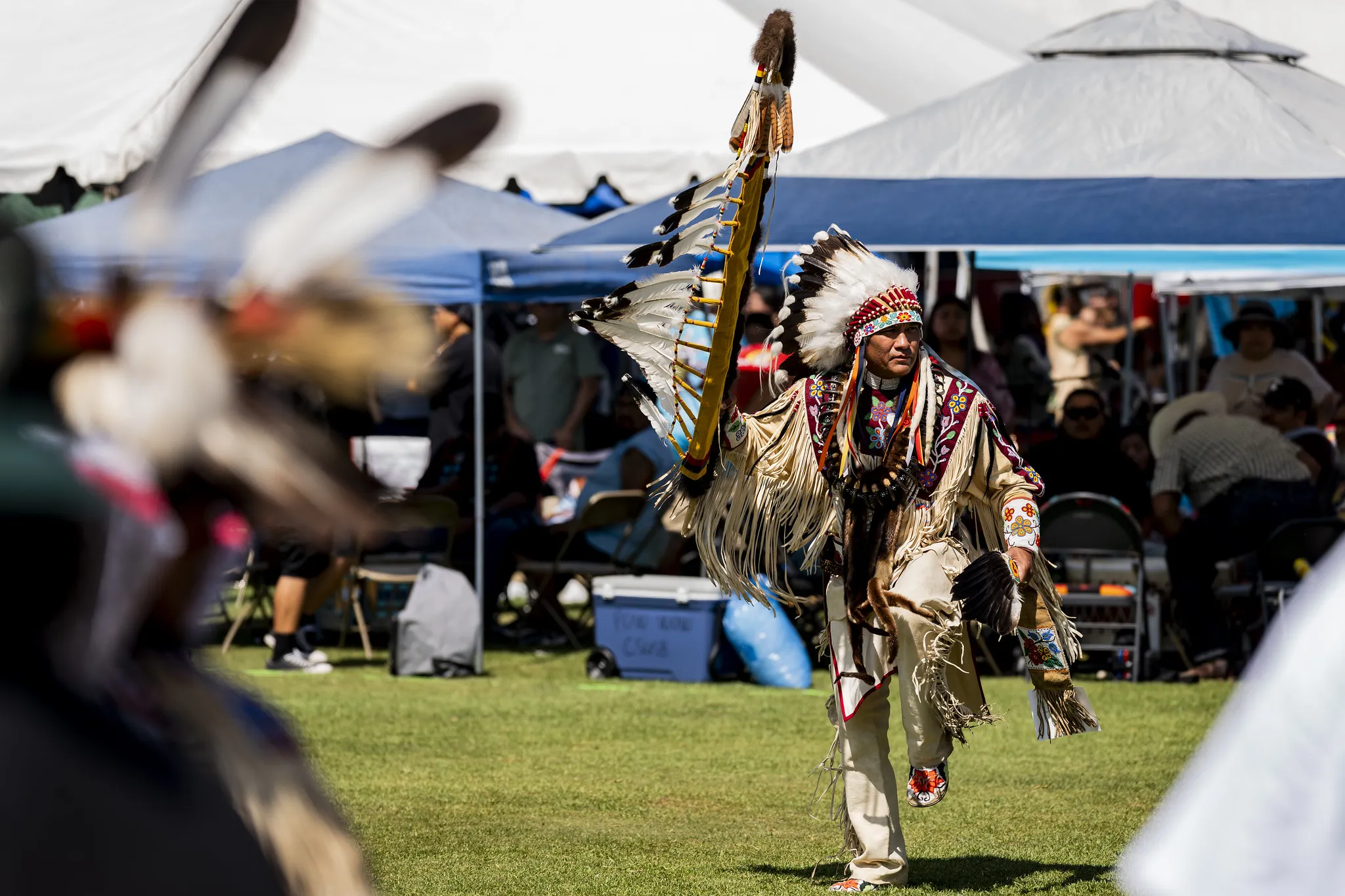
On the athletic field, those explanations came to life with the sound of drums and singers accompanying dancers into the arena. Before Saturday afternoon’s Grand Entry, the announcer said a prayer and asked those able to stand to rise as the various tribal and organizational representatives entered. Dancers followed in a procession that brought generations and dance traditions together in the same circle.
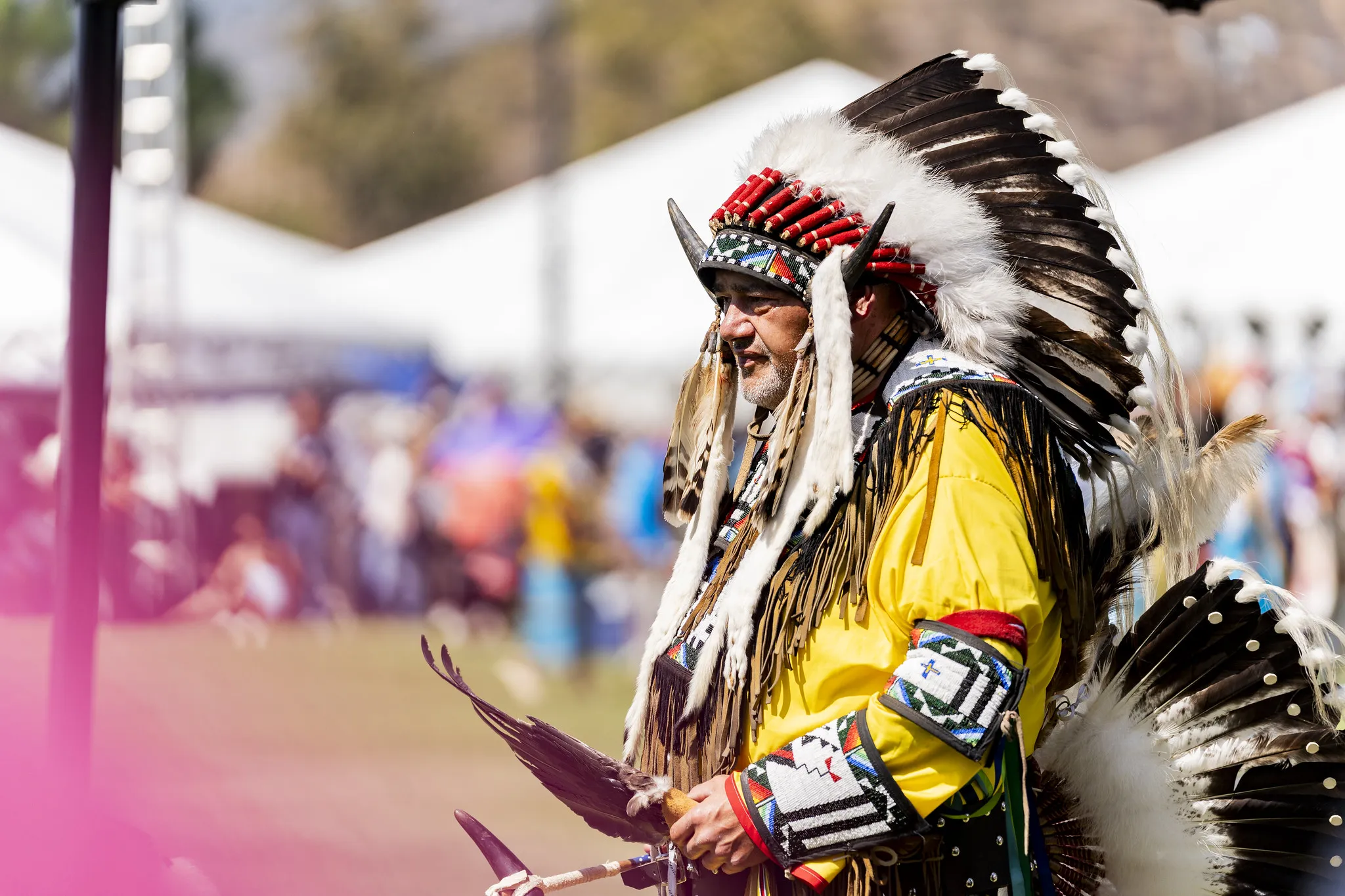
The weekend’s dance categories included traditional, grass, chicken, fancy, jingle dress and fancy shawl styles. Each brings its own movement and regalia: Long fringe emphasizes the swaying motions of grass dancers, while men’s fancy dancing features quick footwork and jumps. Fancy shawl dancers turn and step beneath flowing, fringed shawls, and the metal cones on jingle dresses add sound to the dancers’ movements.
 Stephen Day
Competition divisions extended from young dancers to Golden Age participants 65 and older. Alongside the contests, the event’s program included exhibition and intertribal dancing, placing competition within a broader gathering centered on participation, cultural expression and community. The walkway displays offered visitors an introduction; the arena brought those traditions into motion.
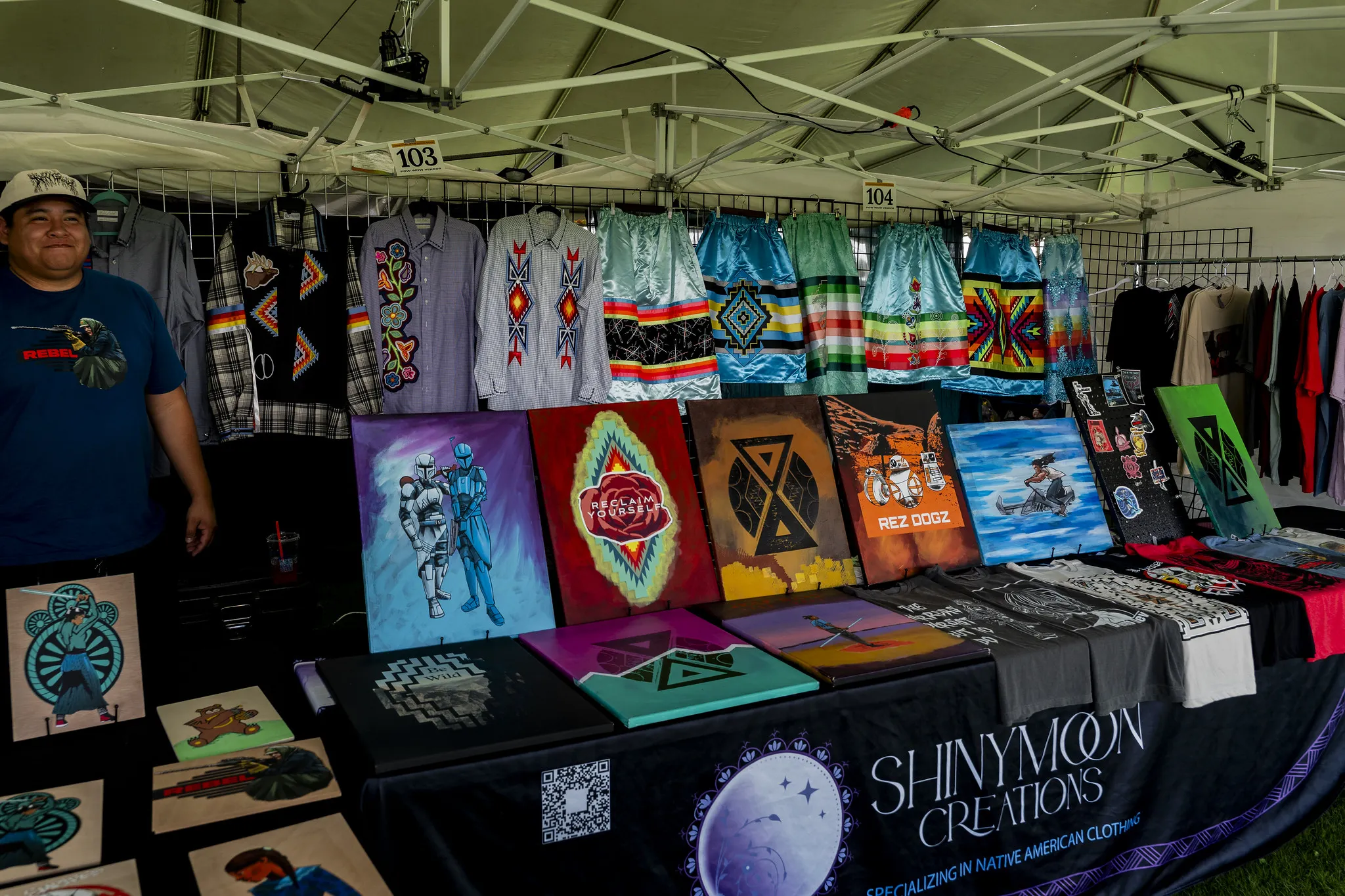
For Enoch, one of the artists behind Reclaim Designs, cultural connection also takes shape through contemporary art. At his family’s booth, Shinymoon Creations, Enoch discussed designs that combine pop culture and science fiction with traditional teachings. Growing up, he said, he had not learned many of those teachings. He began exploring his culture and language more deeply around his senior year of high school, bringing those discoveries into artwork already influenced by the stories and characters he knew.
 Stephen Day
He also discussed what it means for visitors to purchase and wear work created by Native artists. For him, knowing the maker, understanding the artist’s intentions and learning the stories behind a design distinguish that relationship from wearing stereotypical imagery simply for its appearance.
When I started reclaiming, you know, language and traditional teachings, I kind of just naturally fused the two together
Enoch said his own work has boundaries: He does not sell sacred ceremonial pieces.
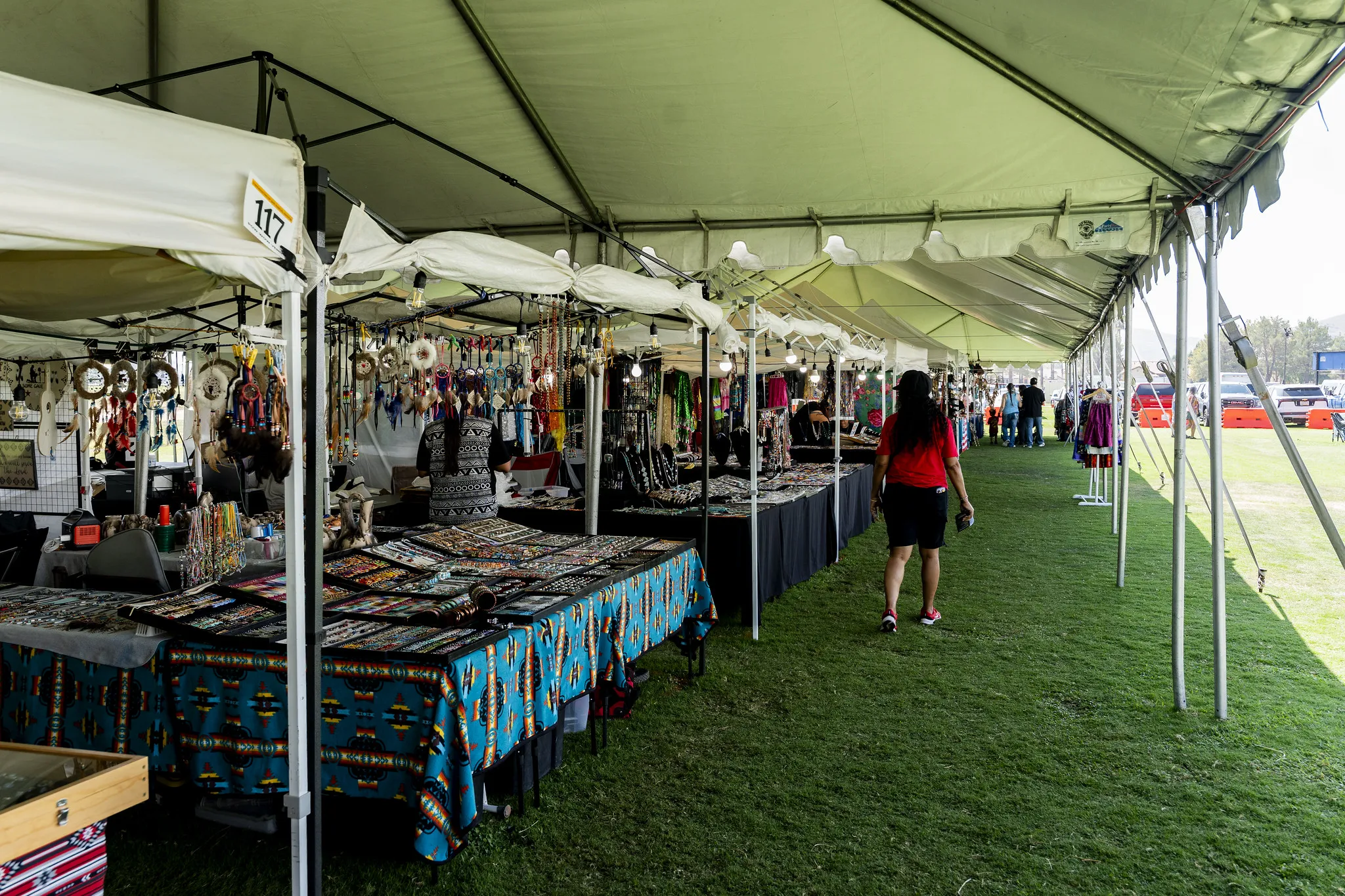
At Desert Rain Jewelry, Belita described another connection between art and family. Alongside turquoise jewelry, she sells pieces made with cedar berry seeds collected from juniper trees, handpicked and drilled for use in jewelry.
She remembers her grandmother selling cedar beads when she was about 5 or 6. Her mother later sold jewelry, and Belita continued the work after her mother died of cancer. Now she is teaching her own children to sell directly to customers. “Each one has their own story, but my story comes from my grandma.” she said.
The booths also provided opportunities for visitors to connect with organizations whose work continues beyond the weekend.
Seeing all our folks coming from different parts of the country, even the world, and just being in a good, safe space.
Norma Contreras and Sarah Marez, case managers with the Strong Hearted Native Women’s Coalition, described support for people experiencing domestic violence, human trafficking and sexual assault. Marez said emergency assistance can include shelter, clothing and food, depending on a client’s needs. “It just depends on what the need of the client is and how we're able to help,” Marez said.
 Stephen Day
Contreras said the services extend beyond Indigenous clients. For Marez, attending the powwow offered both a sense of community and a chance to let people know support is available.
At Wildhorse Native Foods, Harrelson Notah described how serving visitors supports the WildHorse Native American Association’s cultural activities and education efforts. He said food sales help fund the nonprofit’s annual powwow at El Camino College and scholarships for Native students.
Notah also described the Wild Horse Singers’ work with urban Native communities through singing, dancing and cultural programming. At the food booth, he said, supporting that work also means keeping meals affordable for families.
Jorge Ruiz, representing the Native American Resource Center, part of Riverside-San Bernardino County Indian Health, Inc., described language and cooking classes as ways to support community well-being. This was his second year attending the San Manuel Pow Wow and his first staffing a booth. His favorite part was the Grand Entry.
Ruiz, who identified himself as Mexican and Indigenous, said attending powwows and building friendships had helped him learn more about his roots. He recalled food, including tamales and pozole prepared by grandmothers, as a connection to heritage when language had not been passed down. “That was our roots. That was us clinging to our roots and our culture,” he said.
For the Munoz family, who traveled from Murrieta, the weekend offered both meaningful participation and familiar pleasures.
 Stephen Day
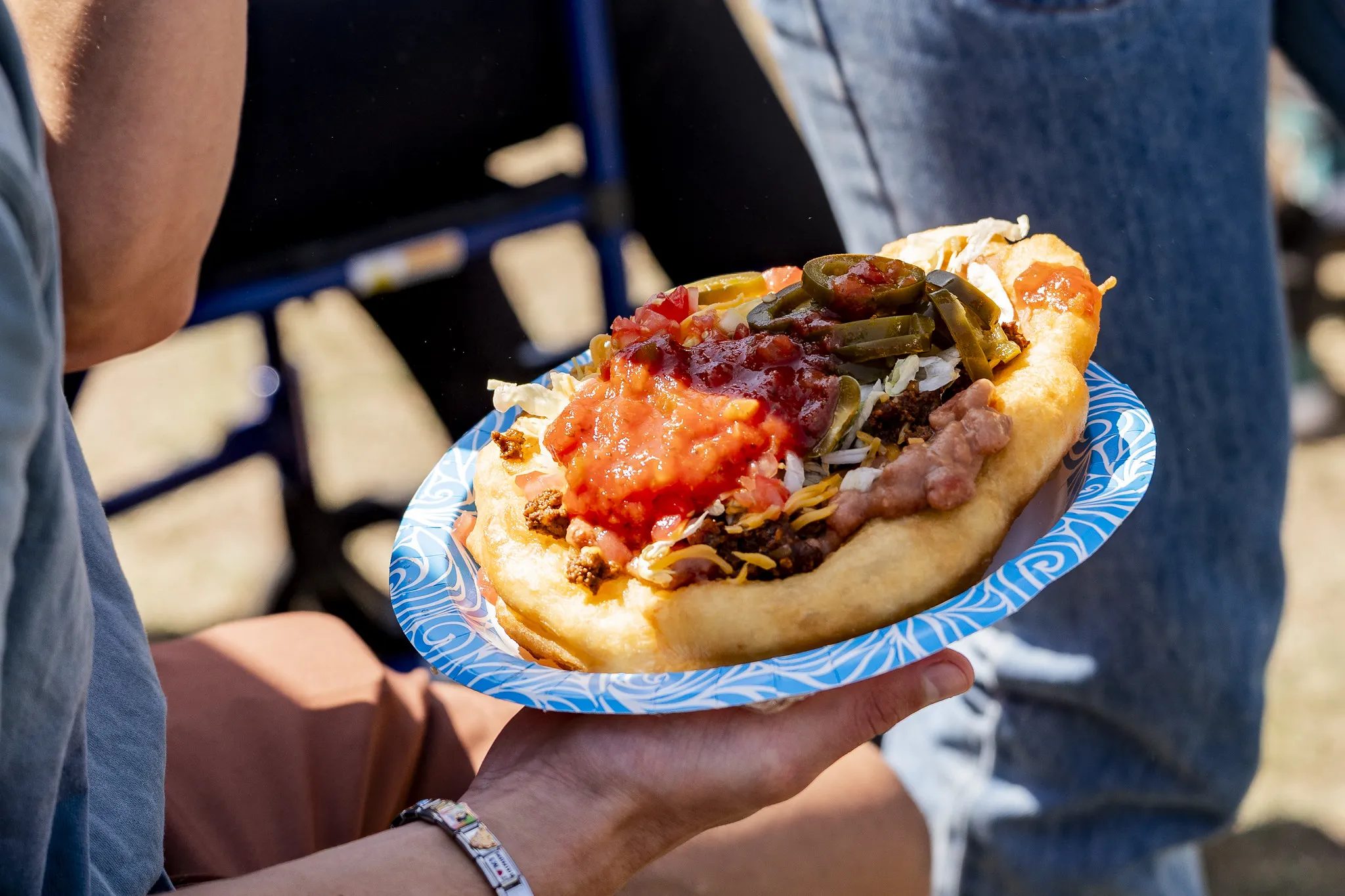
Kaiya’s favorite part came after dancing; getting frybread. She had advice for first-time visitors, including finding frybread with a fluffy interior and making time to explore the food and shopping. “Never shop on an empty stomach,” she said
Her excitement for the food and shopping sat alongside a clear understanding of why she danced. At her first San Manuel Pow Wow, Kaiya was carrying her ancestors and a sick family friend into the experience with her.