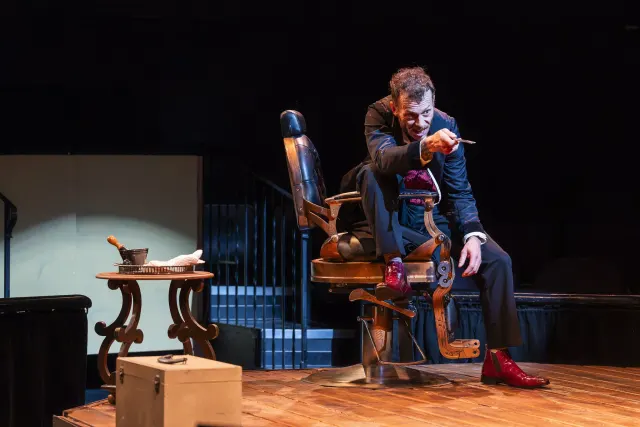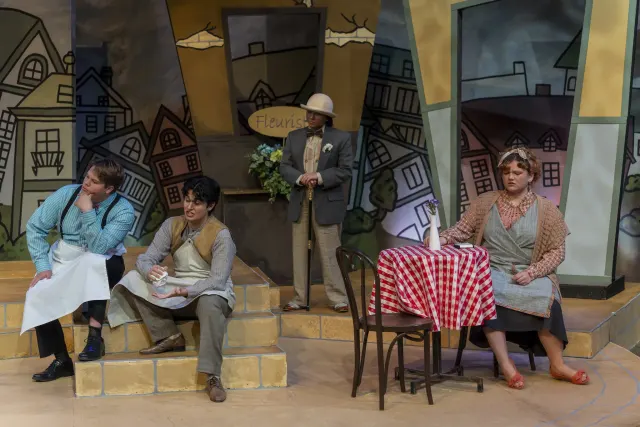
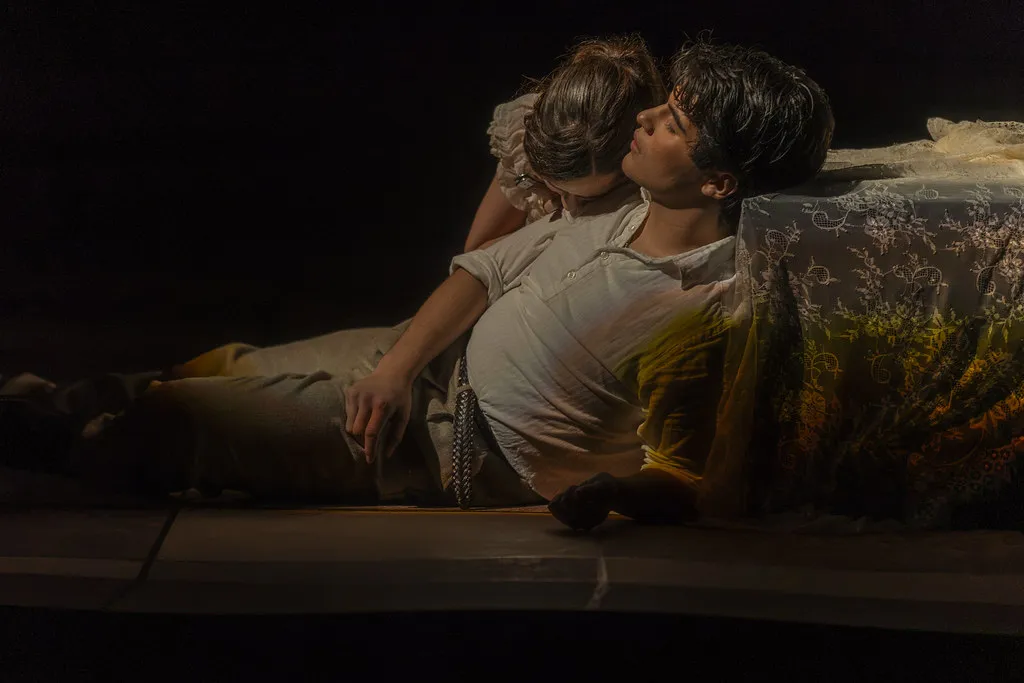
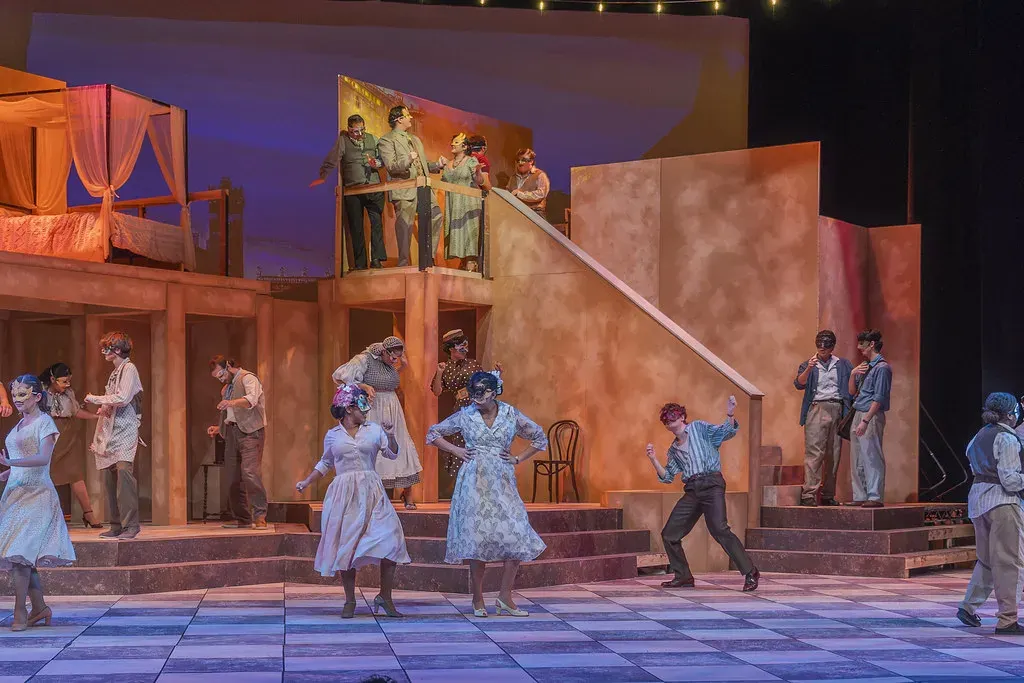
“These violent delights have violent ends,” Friar Laurence warns in Act 2, Scene 6 of “Romeo and Juliet.” But first, we party. “Rock Around the Clock” plays as guests twist and dance across the stage, and Romeo forgets Rosaline and falls for Juliet. In CSUSB’s production, the young lovers have plenty of life in them before the family feud threatens to take it away.
SEE ALL THE PHOTOS ON OUR FLICKR PAGE
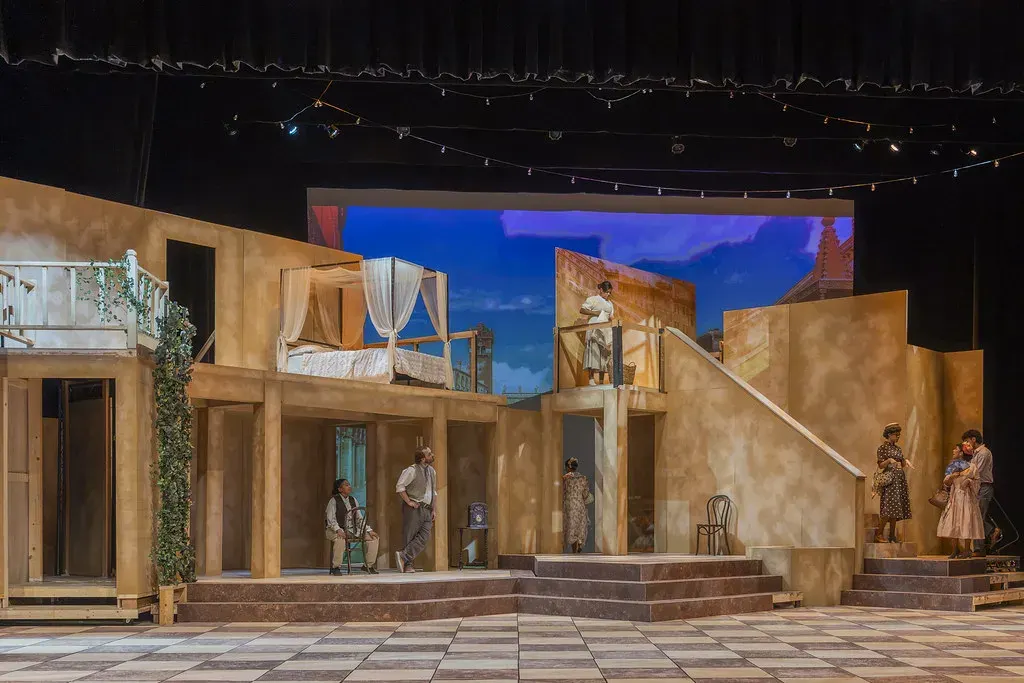
Opening Nov. 13, “Romeo and Juliet” marks the first theatrical production in CSUSB’s new Performing Arts Center and director Terry Donovan Smith’s final directing production at the university. Set in late-1950s Verona, the production brings youthful impatience, playful humor, and forceful stage combat to Shakespeare’s tragedy. As the production wrapped up tech week, the strongest performances made the familiar characters feel like young people caught up in desires and conflicts they can’t quite control.
 Stephen Day
Julian Salcido brings Romeo’s impetuousness to the forefront. His sudden shift in affection at the party fits a young man who feels everything urgently but still makes his love for Juliet come across as deep and genuine. Salcido allows both qualities to flow and coexist; Romeo is reckless, but his feelings aren’t disposable.
 Stephen Day
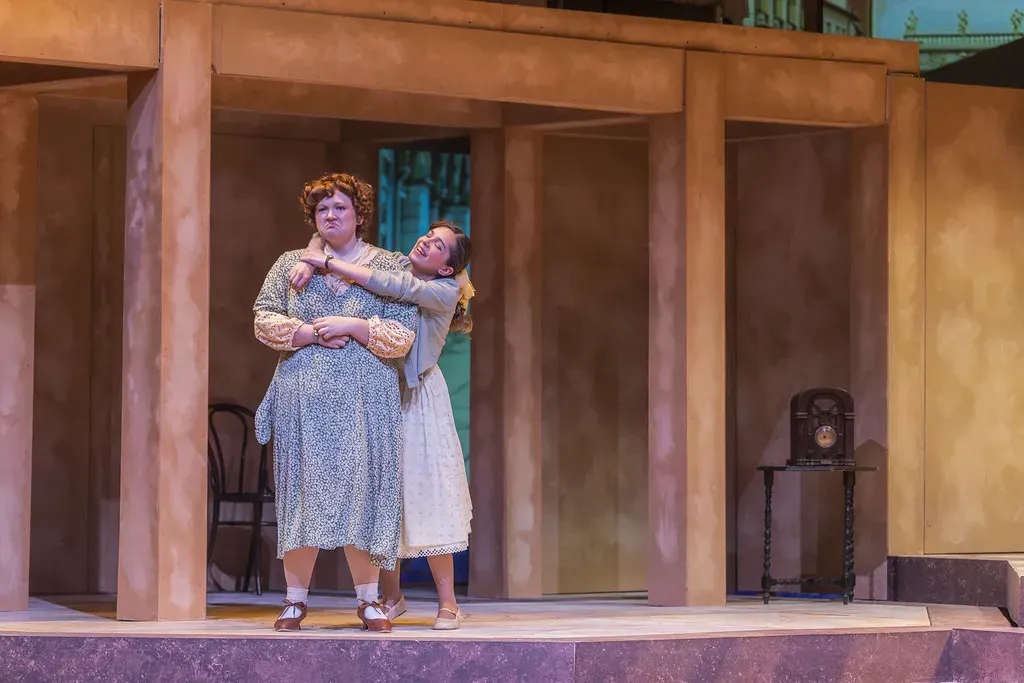
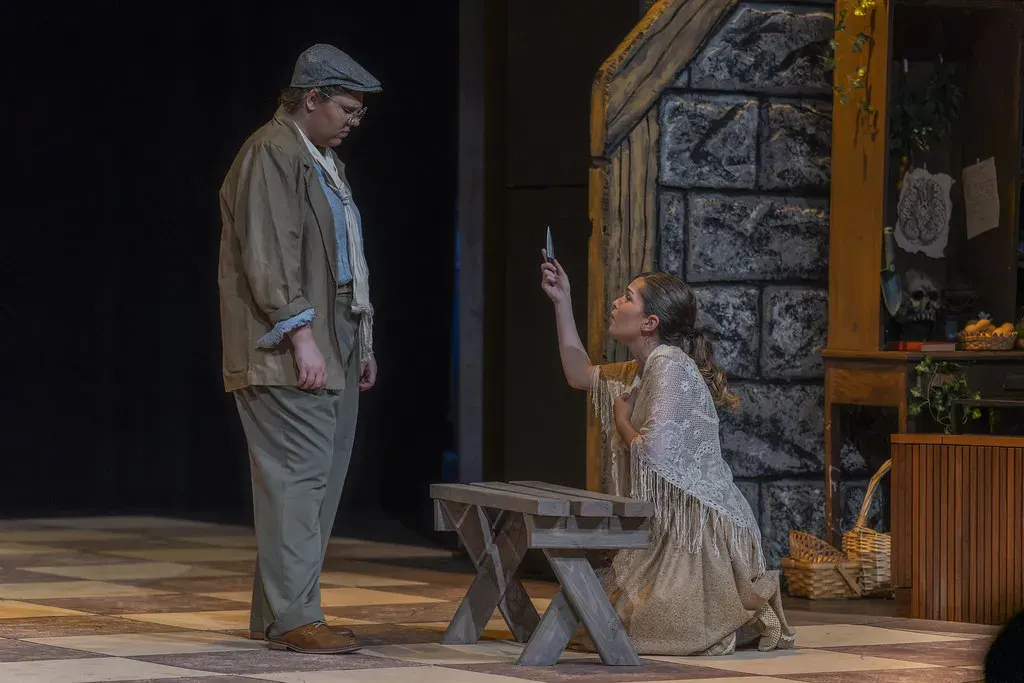
As Juliet, Kylie Currie gives that urgency an equally youthful counterpart. Her impatience is particularly enjoyable in the interactions with her Nurse, where the romance tries to dance around the person standing between Juliet and the news she wants.
 Stephen Day
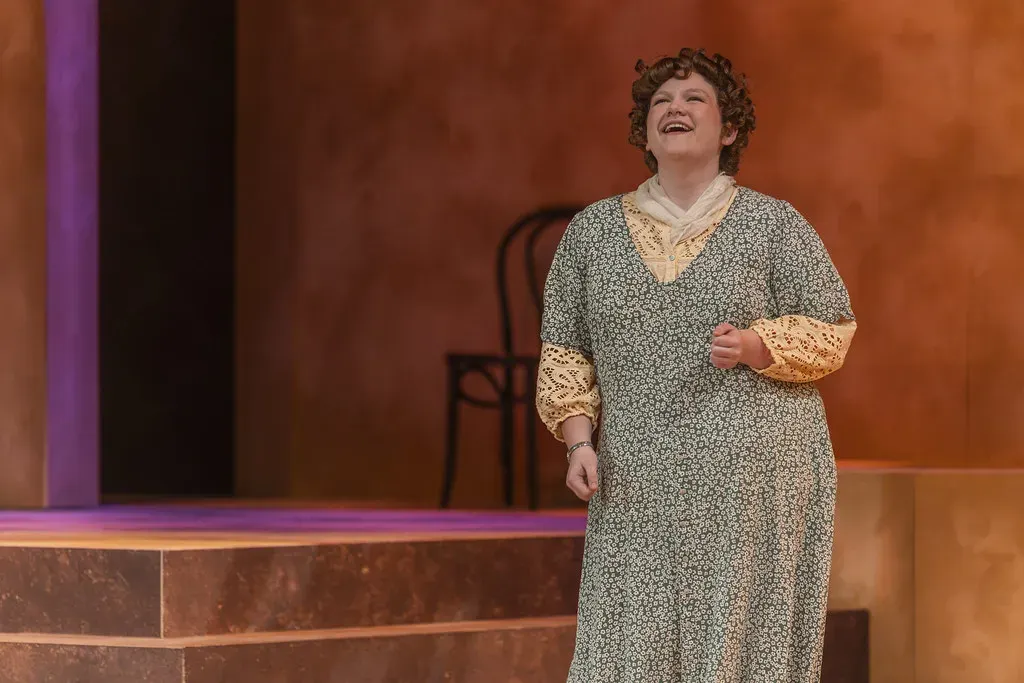
Leo Moran’s Nurse is a joy to watch. Charged with the unenviable task of protecting Juliet’s innocence and serving as a sort of conscience, she gets swept up in the excitement of young love. Moran captures the appeal of living vicariously through that romance, giving the character a personal investment that makes her more than just a messenger or comic relief.
 Stephen Day
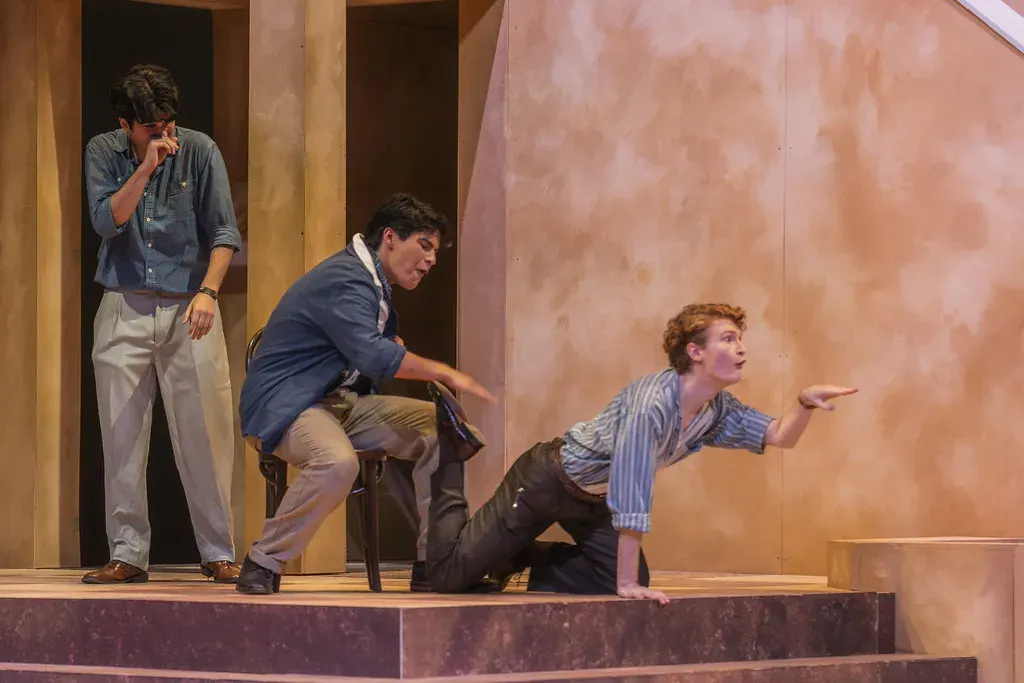
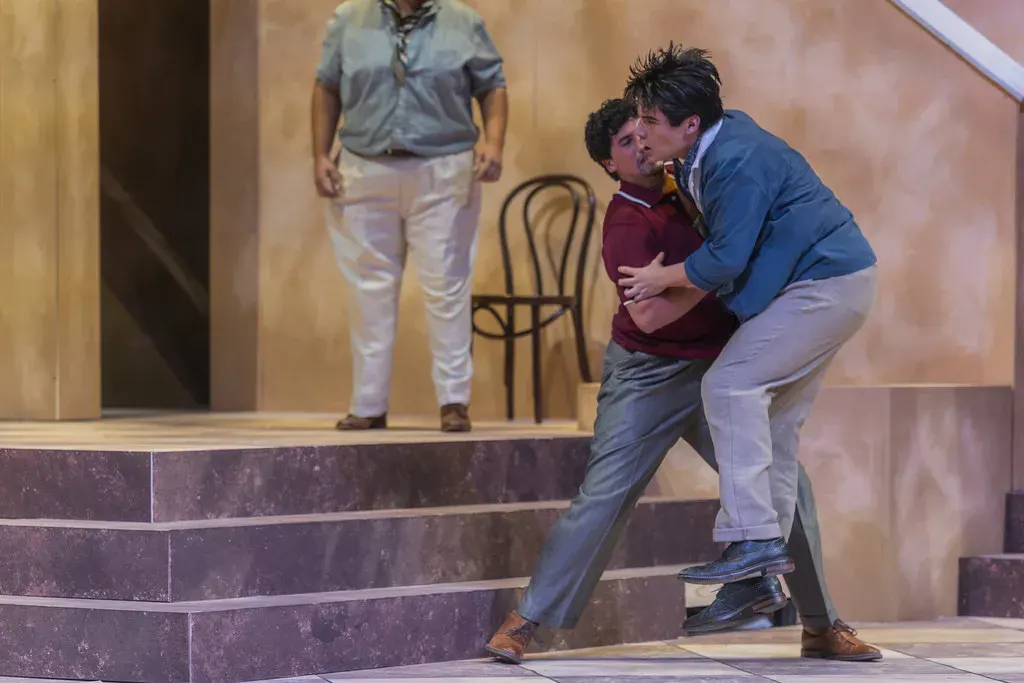
Jaren Cochran’s Mercutio steals every scene he inhabits. Cochran exudes playful abandon, bringing an exuberance that makes his performance especially fun to watch. That energy flows through Mercutio’s final fight, an arresting sequence with fight choreography by Mark Rogers. The movement from playfulness to violence gives the feud an early consequence that goes beyond Romeo and Juliet’s love.
 Stephen Day
For Smith, setting the play in the 1950s allowed him to explore the postwar cultural tensions, and play with early rock ‘n’ roll and Italian jazz musical influences while maintaining a key element of the storyline: lack of instant communication.
 Stephen Day
“One of the requirements of the show, of the play, is that you can’t have instant communication,” Smith said.
 Stephen Day
“Romeo and Juliet” pairs 1950s rock ‘n’ roll with Shakespeare’s tragedy as Terry Donovan Smith directs his final CSUSB production.